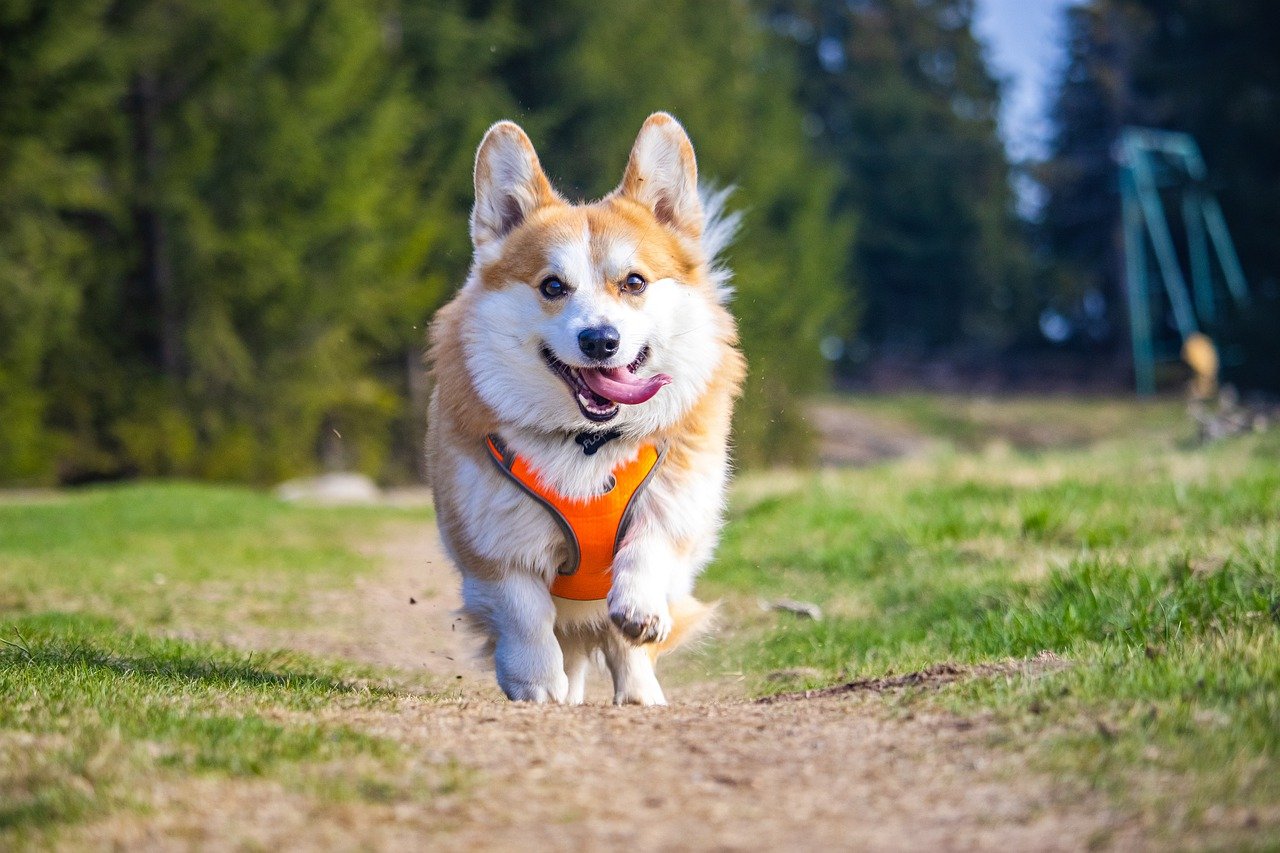
The tail is wagging and the body is rigid. He rolled over for a belly rub and then snapped. He came forward to greet the visitor and immediately backed away. These are the moments that make people say a dog is unpredictable, and they are the most readable moments there are once you know what conflict looks like.
I am not a trainer or a behaviorist. This is the part of dog body language I got wrong for years, because I was reading one signal at a time.
Conflict is a normal state, not a malfunction
A dog who wants to approach and also wants to retreat produces both sets of behavior at once. The result looks contradictory because it is: two motivations running simultaneously.
That state matters more than either signal on its own. A conflicted dog is a dog under pressure who has not yet decided, and decisions made under pressure are the ones that end badly.
The AVMA is careful to warn that “we can’t always read a dog’s body language accurately, and dogs, just like people, have their own unique personalities and don’t all express themselves in the same way.” Mixed signals are exactly where that caution earns its keep.
The rule that resolves most of them
When signals disagree, believe the tense one.
Treat tension as a reason to pause and create space. It does not have a measurable cost that proves one signal is more truthful; the full body and context matter.
Common mixed signals and what usually wins
In every row the safe reading is the second column. None of these dogs are being deceptive; they are undecided.
| What you see | The safe reading | What to do |
|---|---|---|
| Tail wagging, body stiff, mouth closed | Aroused and braced, not friendly Back off | Stop approaching. Let him choose to come to you. |
| Rolls onto his back, body frozen, eyes tracking you | Appeasement, not an invitation | Do not rub the belly. Step back and see if he gets up. |
| Comes forward, then retreats, then comes forward | Approach and avoid conflict | Stand still or turn side-on. Let him close the distance. |
| Barks and backs away at the same time | Frightened, not confident | Give more distance, not less. Never advance into it. |
| Play bow followed by a freeze | Potential discomfort or a change in interaction | Safely call the dogs apart if possible; end for persistent tension. Do not grab collars or reach between fighting dogs. |
| Leans on you while panting with a tight mouth | Seeking contact while stressed | Stay still, stop petting, work out what is worrying him. |
Framing follows the fear and worry signals described by the AVMA. The pairings are our own.
The wagging tail, in detail
A wag means arousal. It does not mean friendly. What tells you which kind of arousal is everything around it: how high the tail is held, how fast and how wide the sweep is, and what the rest of the body is doing.
Low and broad, with a wiggle running through the hips, is the one people mean when they say friendly. High and fast with a small arc, on a still body, is a dog who is highly aroused and has not decided what happens next.
The practical version is simple: never use the tail as your only input. Look at the mouth first, then the body, then the tail.
The belly, which is two different things
A dog who flops over with loose limbs, wriggling, mouth open, is asking for a rub. A dog who rolls slowly and then holds still, with a tight mouth and eyes fixed on you, is doing something else. The AVMA lists a dog who “lies down with a leg up” among the signals that he is frightened or feels threatened.
Rolling over, even while loose, is not automatic permission for a belly rub. Pause, allow choice and stop for avoidance or tension. Do not test an uncertain dog with touch.
Play that has stopped being play
Two dogs playing produce plenty of alarming-looking behavior: growling, mouthing, chasing, body slams. What makes it play is that it keeps changing. Roles swap, they take small breaks, and it stays loose.
Play is tipping over when one dog stops taking turns, when the pauses disappear, or when one dog is repeatedly trying to leave and the other keeps re-engaging.
If safe, call the dogs apart and give space. End the activity for repeated avoidance or tension; only resume if both freely re-engage comfortably. Ten seconds cannot prove that play is safe. Never reach between fighting dogs or grab collars in a conflict.
Reading a dog you do not know
- Look at the mouth before the tail, every time
- When signals disagree, act on the tense one
- Stand side-on rather than facing a hesitant dog head-on
- Let the dog close the last of the distance, never you
- Treat a frozen belly-up dog as a request for space
- Interrupt play every minute or two and watch what happens
- If you are unsure, do nothing and ask the owner
A bite can follow misunderstood or very subtle signs, and some signs may not be obvious. This page cannot establish how often that occurs or guarantee prevention from a particular rule.
You do not need to interpret perfectly. You need one habit: when a dog’s signals disagree, stop moving toward him. That single response prevents most of the situations where interpretation would have mattered.
Book an appointment if your dog:
- Has recently become conflicted about handling he used to enjoy
- Freezes or stiffens when touched in one particular area
- Snaps after seeming to invite contact
- Startles at things he used to ignore, or seems not to hear you
- Has bitten, or come close to it
Pain is one possible contributor to a new handling response, alongside fear and other causes. Stop testing the reaction, arrange veterinary assessment and ask for qualified behavior help after a bite or near miss.
Practising on your own dog
Watch one interaction a day and write down two things: what the mouth was doing and what the body was doing. A week of that teaches you more than any amount of reading, because you stop seeing a dog and start seeing a set of separate signals that sometimes disagree.
Our guides to reading your dog’s body language and understanding facial expressions cover the individual signals, and fear and aggression covers what happens when the conflict is never resolved.
Try it on the next greeting. Before you decide the dog is pleased to see you, look at the mouth.
Questions people ask
Does a wagging tail mean my dog wants me to come closer?
A wag shows arousal, not a clear welcome. Read the rest of your dog: a stiff frame, closed mouth, fixed stare, or high tight tail calls for space. Stop your approach, turn a bit to the side, and let your dog decide whether to come closer. A loose frame and broad sweep carry a different message.
Why does my dog roll onto his back and then snap?
Rolling onto his back can mean an invitation, but it can also ask for space. Watch the whole body. Loose limbs, movement, and an open mouth point toward comfort. A frozen frame, tight mouth, and eyes that track you point toward stress or fear. Stop touching him and step away. If this response is new, tied to one spot, or includes a snap, call your vet to check for pain.
Why does my dog come toward someone and then back away?
Your dog may want contact and distance at the same time. That push and pull can produce a step forward, a retreat, then another approach. Do not reach, lean over, or close the gap. Stand still or turn side-on, keep the path open, and let your dog choose the distance. A stiff body, shut mouth, or backward weight means you should give more room.
How can I tell when dog play has stopped being play?
Watch for loose movement, pauses and voluntary participation. If one dog tries to leave or either freezes, safely call them apart if possible and end the interaction for persistent tension. Do not use a timed break as a safety test or reach into a fight.
Could my dog’s mixed signals mean he is in pain?
Mixed signals do not prove that your dog is hurt, but a new change around touch deserves a vet call. Watch for stiffness when you touch one area or a snap after contact. Note what happened before the reaction and where your hand was. If your dog startles at familiar things, seems not to hear you, has bitten, or has come close, stop testing the trigger and contact your vet.
Sources
- AKC, says a tail wag needs context from its speed, direction, and position to show a dog’s emotion and intent.
- ASPCA, explains that aggression can build through warning behaviors, but a dog may stop during the encounter.
- ASPCA aggression guidance, on context, variable warning signs, safety and professional assessment.
- AVSAB behavior position statements, on reward-based methods, welfare and veterinary support.
Updated October 18, 2026. We corrected diagnostic and safety overstatements, reconciled the practical advice and FAQs and clarified when individual veterinary or behavior support is needed.